
6. Stochastic Responses#
\(\newcommand{\eqdef}{\stackrel{\text{def}}{=}}\)
Authors: Jaroslav Borovicka (NYU), Lars Peter Hansen (University of Chicago), and Thomas J. Sargent (NYU)
Pioneers of time series econometrics
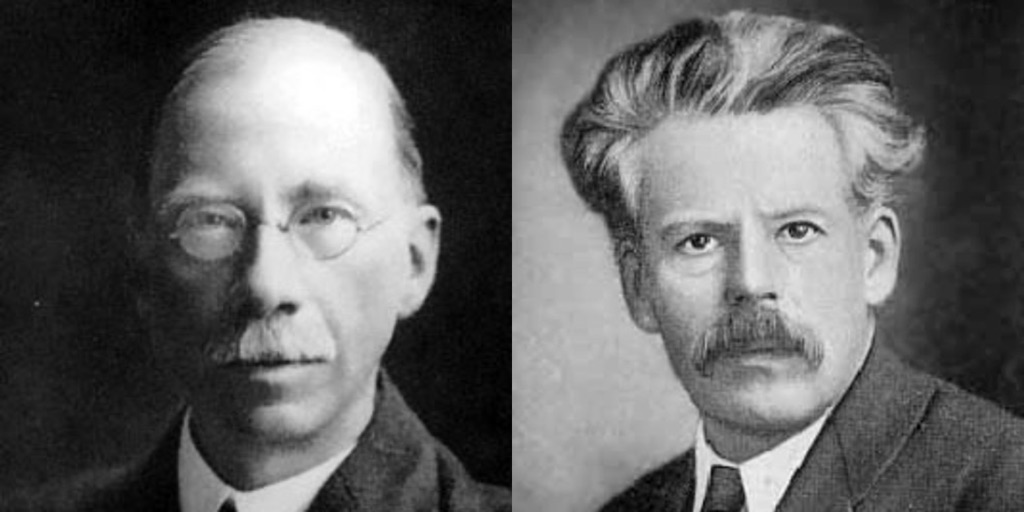
Fig. 6.1 Left: Yule (AR2 model of recurrent business cycles, 1927). Right: Slutsky (moving-average representations of recurrent business cycles, 1927)#
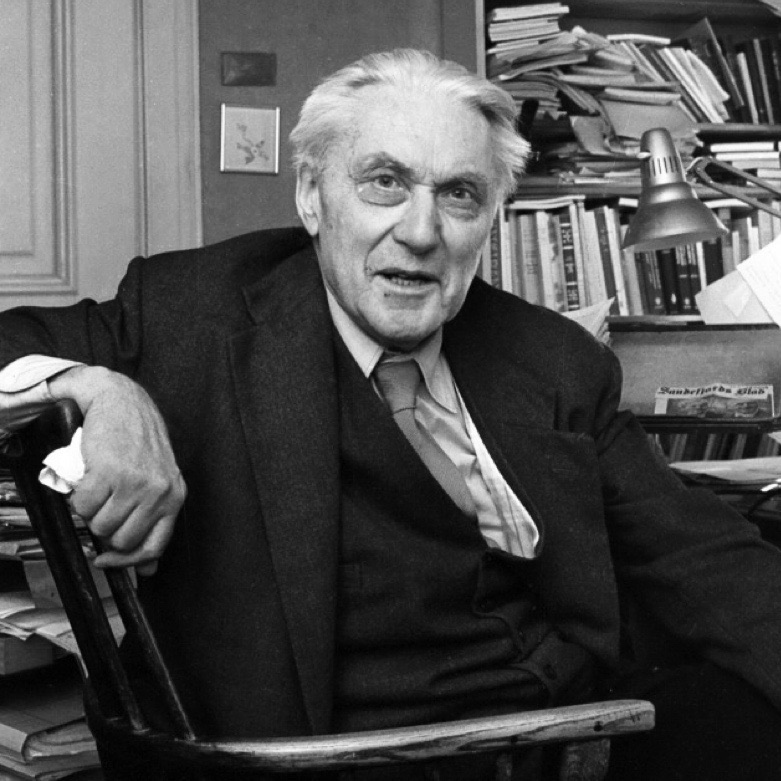
Fig. 6.2 Frisch (Impulse and propagation, 1933)#
“There are alternative ways in which we may approach the impulse problem. … One way which I believe is particularly fruitful and promising is to study what would become of a deterministic dynamic system if it were exposed to a stream of erratic shocks that constantly upsets the continuous evolution, and by so doing introduces in the system the energy necessary to maintain the swings.” – Ragnar Frisch (1933)
6.1. Introduction#
Impulse-response methods have been used by economists since [Frisch, 1933]. Frisch built on earlier insights of [Yule, 1927] and [Slutsky, 1927], who described ways to obtain indeterministic recurrent business cycles from linear time series models. Subsequently, [Sims, 1980] showed how to estimate and use vector autoregressive systems to model shock transmission across multiple time series. For nonlinear stochastic models, impulse response functions are themselves stochastic processes. In contrast to their linear counterparts, they do not simply scale linearly with increases in the sizes of the impulses. Alternative approaches have been suggested in economics including [Gallant et al., 1993], [Koop et al., 1996], and [Gourieroux and Jasiak, 2005]. This chapter provides stochastic responses for both discrete and continuous time for marginal changes in state variables and shocks.
Much, but not all, of the vast literature on vector autoregressions views impulse response functions as ends in and of themselves. For instance, many applied researchers use what they call “structural VARs”. Applied researchers often embrace “causal language” in which identified shocks taken are interpreted as exogenous inputs into a dynamical system that are assumed to “cause” movements in the vector time series of interest. While interesting, such impulse response functions are difficult to connect to counterfactuals in the form of consequences to the hypothetical interventions in the form of prospective policy changes that are at purpose of models that are structural in a more classic econometric sense. Thus, builders of dynamic stochastic equilibrium models use a concept of ‘structural’ in the sense of [Marschak, 1953], [Hurwicz, 1966], and [Lucas, 1976]. They want to investigate how a dynamical system changes when one portion of it is altered. When [Hurwicz, 1966], for instance, provided a formal definition of a structural model, he chose not to use the term “cause.”
Despite these appropriate reservations about such causal or structural interpretaions, the stochastic impulse responses that we characterize in this chapter are key inputs into constructing marginal valuations that we shall use for a variety of purposes.
The responses that we characterize in this chapter are local in nature. They measure how a full vector time series responds to a small change in a state or shock at some initial time period. They are convenient because they have a simplified structure. In contrast to global calculations for nonlinear models, the local responses scale linearly in the magnitude of the initial perturbation. They can be suggestive of the impacts of large changes, but they are not intended as a substitute for global investigations. In subsequent chapters, we provide extensive discussions of two types of such applications and extensions that complement the empirical macroeconomists’ quantitative characterizations. Chapter 8 constructs what we call shock elasticities that help us characterize the building blocks for exposures to uncertainty and prices of those exposures. Chapter 11 provides asset-pricing type representations for the equilibrium evaluation of endogenous state variables including various forms of capital. Their use in this context opens the door to dynamic versions of marginal policy assessments as is common in macroeconomics, public finance, and environmental economics.
6.2. Discrete time#
We first consider a discrete-time specification.
6.2.1. Markov dynamics#
We start with a Markov process
where there are \(n\) components of the state vector process \(X,\) \(Y\) is a scalar, and \(W\) is a \(k\)-dimensional shock process. We include the \(Y\) process to allow for growth along a common stochastic path. For stochastic equilibrium models, the private sector or policy actions are presumed to be embedded in the dynamic representation.
6.2.2. Discrete-time variational dynamics#
We construct what are called first variational processes in the applied mathematics literature. We denote by \(\Lambda\) the marginal responses of the \(X\) process, and we denote by \(\Delta\) the marginal responses of the \(Y\) process. Both are stochastic processes. We use the initial conditions, \(\Lambda_0\) and \(\Delta_0,\) to delineate what responses are of interest. For instance, if \(\Lambda_0\) is set to a coordinate vector, we study the responses to a marginal change in the corresponding date zero state variable, \(X_0\). For these and other initializations, \(({\Lambda_t}', \Delta_t)'\) is the date \(t\) state vector stochastic response to the chosen perturbation at the initial date. These variational processes are the stochastic impulse responses to small changes in the underlying state variables.
To obtain a recursive representation for \((\Lambda, \Delta),\) we differentiate (6.1) in a generalized sense to accommodate the stochastic structure and apply the chain rule:
In this calculation, \(\Lambda_{t+1}\) and \(\Delta_{t+1}\) are stochastic as they inherit the stochastic dependence of \(X_{t+1}\) and \(Y_{t+1}.\) Moreover, they have the same dimensions as \(X_{t+1}\) and \(Y_{t+1},\) respectively. By differentiating the process at a given initial calendar date, we are allowing for date \(t\) variables to change as a function of date \(t\) information. Not surprisingly, the variational process dynamics depend explicitly on the original state dynamics.
Example 6.1
The evolution of the variational processes is nonstochastic if \( \frac {\partial \psi}{\partial x'}\) and \( \frac {\partial \kappa}{\partial x}\) are constant as is true when \(\psi\) and \(\kappa\) are affine in \(x\). Otherwise, variational processes are stochastic.
Example 6.2
Consider the following quadratic specification:
where \({\mathbb A}_i\) and \({\mathbb D}\) are normalized to be symmetric. A simple calculation shows:
This illustrates a specific stochastic structure for the variational processes. As we have seen in Chapter 9, quadratic specifications of this type emerge as second-order approximations to nonlinear stochastic models of state dynamics.
Example 6.3
To obtain responses to initial shocks, set
where we set \(w_0\) to be a coordinate vector with a one in the position corresponding to the particular shock response of interest.
6.3. Continuous-time dynamics#
We now consider the continuous-time counterpart for Brownian motion shocks.
6.3.1. Markov diffusion dynamics#
As a part of a more general derivation, we begin with state dynamics modeled as a Markov diffusion:
where \(W\) is now a \(k\)-dimensional standard Brownian motion. We denote the filtration (family of specifications of conditioning information events) \({\mathfrak F} \eqdef \left\{ {\mathfrak F}_t : t\ge 0\right\}\) constructed from the Brownian motion and any pertinent date zero information.
6.3.2. Stochastic responses#
Following [Borovička et al., 2014], we construct stochastic responses using marginal impulse response functions for Markov diffusions. We build the dynamics for the stochastic response process, \(\Lambda\), by following the construction in [Fournie et al., 1999]. As in discrete time, the stochastic responses give the marginal impact on future \(X\) of a marginal change of a particular state or linear combination of states at date zero. Thus the \(\Lambda\) process has the same number of components as \(X\). We isolate the perturbation of interest by our choice of how to initialize \(\Lambda\).[1]
The drift for the \(i^{th}\) component of \(\Lambda\) is
and the coefficient on the Brownian increment is
for \(\lambda\) a hypothetical realization of \(\Lambda_t\) and \(x\) a hypothetical realization of \(X_t,\) where \('\) denotes vector or matrix transposition. The implied evolution of the process \(\Lambda^i\) is[2]
With the appropriate stacking, the drift for the composite process \((X,\Lambda)\) is:
and the composite matrix coefficient on \(dW_t\) is given by
Let \(\Delta\) be the scalar variational process associated with \(Y.\) Then
Analogous to the discrete-time outcome, the variational dynamics depend explicitly on the original diffusion dynamics. As in discrete time, by initializing the vector \(\Lambda_0\) to a coordinate vector, the resulting processes give marginal responses to a corresponding state variable.
Example 6.4
Consider the case of linear dynamics:
Then
Thus
and
Given the underlying linearity, the global responses follow directly from local responses with a scale adjustment for the size of the increment.
6.3.3. Responses to initial shocks#
So far, we have characterized stochastic responses to initial changes in the state variables. From these, we deduce the vector of responses to the initial shocks by changing the initial conditions for the variational processes. Let \(\sigma_i\) denote the \(i^{th}\) column of \(\sigma\) and \(\varsigma_i\) the \(i^{th}\) entry of \(\varsigma\) and initialize:
Using these initial conditions, we obtain the continuous time stochastic responses to shock \(i\) at date zero corresponding to entry \(i\) of \(dW_0\), which we denote \(dW_0^i\). Specifically, the impacts of this date zero shock on \(X\) and \(Y\) are, respectively:
For the special case of linear dynamics given in Example 6.4,
which are the continuous-time counterparts of the familiar impulse responses.
6.3.4. Moving-average representation#
With Markov diffusions, we also have a state-dependent counterpart to a moving-average representation that is well known from linear time series models. The aim is to represent the \(X\) processes in terms of the shock contributions at different dates and then “add up” all of the responses across time and components of the Brownian increments.
Stack the shock-specific responses into matrices and vectors:
where \(\Phi_t\) is \(n \times k\) and \(\Psi_t\) is \(1\times k\).
We constructed the processes, \(\Lambda\) and \(\Psi\) with a date zero initialization. To construct a moving-average representation, we need to shift the date of the initialization. With this in mind, let \({\mathbb S}^u \) be a forward shift operator. When applied to the processes \(\Lambda\) and \(\Delta\), it shifts all of the variables forward, including the initialization date. Note that the Brownian increment, \(dW_u\), induces a stochastic response:
in \(X_t\) and \(Y_t,\) respectively. The stochastic responses include future information. In forming a moving-average representation, we take conditional expectations to eliminate this dependence and then integrate over the shock dates. The resulting formula is known as the Haussmann-Clark-Ocone representation and is given by
When the responses turn out not to be stochastic, as in the case of Example 6.4, the conditional expectations are inconsequential. In this case, we recover the familiar convolution formulas for moving-average representations.
Remark 6.1
Many empirical researchers estimate directly what macroeconomists call Jordà projections, [Jordà, 2005]. These are implemented by regressing a forward sequence of a scalar process on current variables and a shock of particular interest. One can interpret the ambition as wanting to infer impulse responses from direct regressions of future variables on the initial ones, thereby measuring impulse responses. For instance, the aim could be to infer:
by regressing \(X_t\) and \(Y_t\) on a measured shock of interest and including additional variables to purge some of the variation in the measured shock. Some applied papers will include cross terms that are predetermined in advance of the shock to accommodate a form of nonlinearity. For this to be coherent, as our analysis makes clear, one has to think through how the nonlinearity compounds within the stochastic system. The shock of interest can alter other variables that in turn influence the variable of interest in future time periods. Our use of variational processes has the advantage that it captures this perspective when the ambition is to measure local impacts.